


A documented 2024 Honda CT125 installation case explaining why the factory handlebar insert must be removed before expansion-mount bar-end mirrors can be secured.
Quick answer: On a 2024 Honda CT125 with stock handlebars, an expansion-mount bar-end mirror needs a clear hollow section inside the handlebar. The Honda factory internal insert or bar-end weight must therefore be completely removed before the expansion sleeve is installed. Depending on the grip and throttle-tube position, limited grip-end trimming may also be required. After installation, the throttle must return freely and the mirror mount must not rotate.
This guide is based on an anonymized KiWAV customer-support case reviewed in August 2026. It explains the mechanical reason for the handlebar preparation and the safety checks that should be completed before riding.
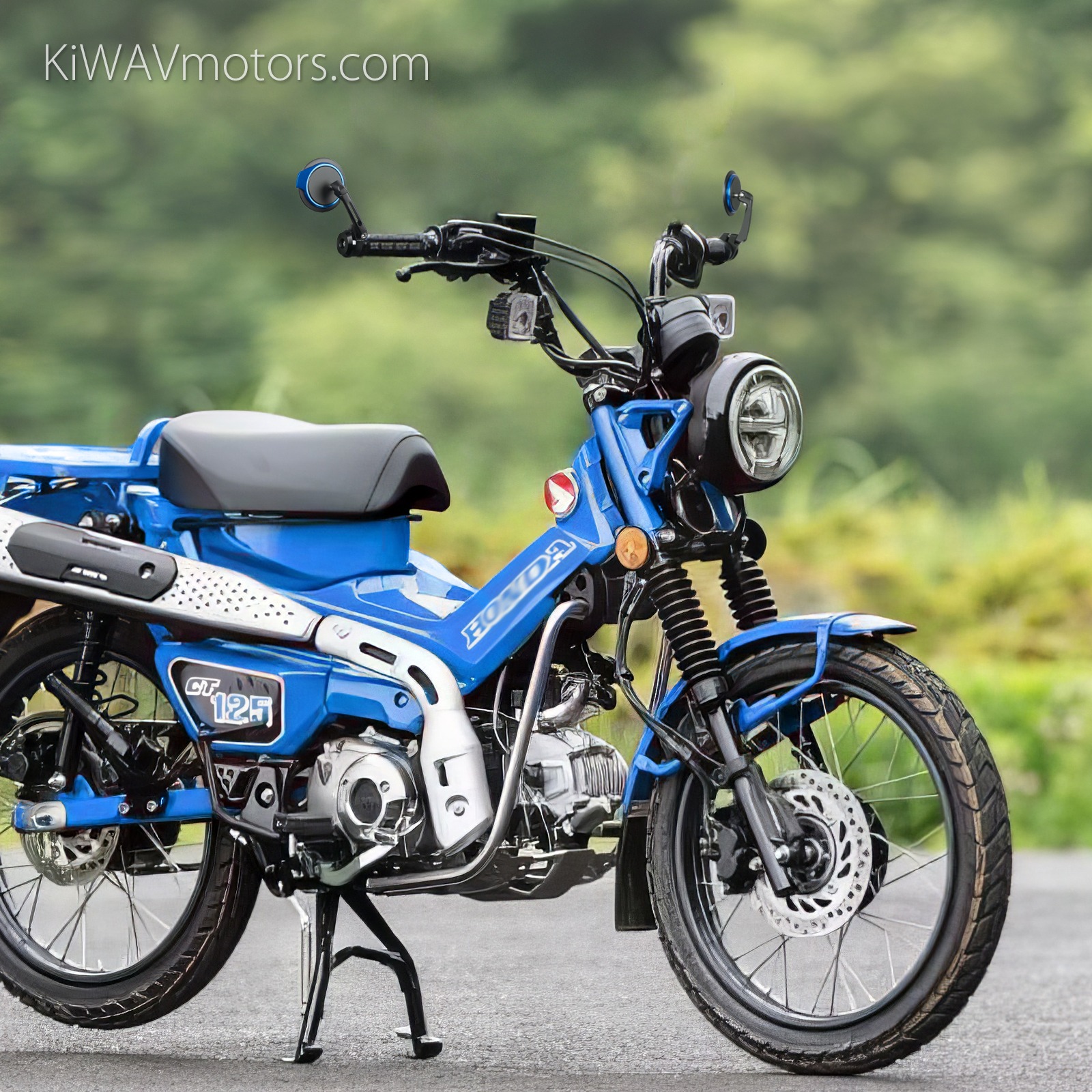
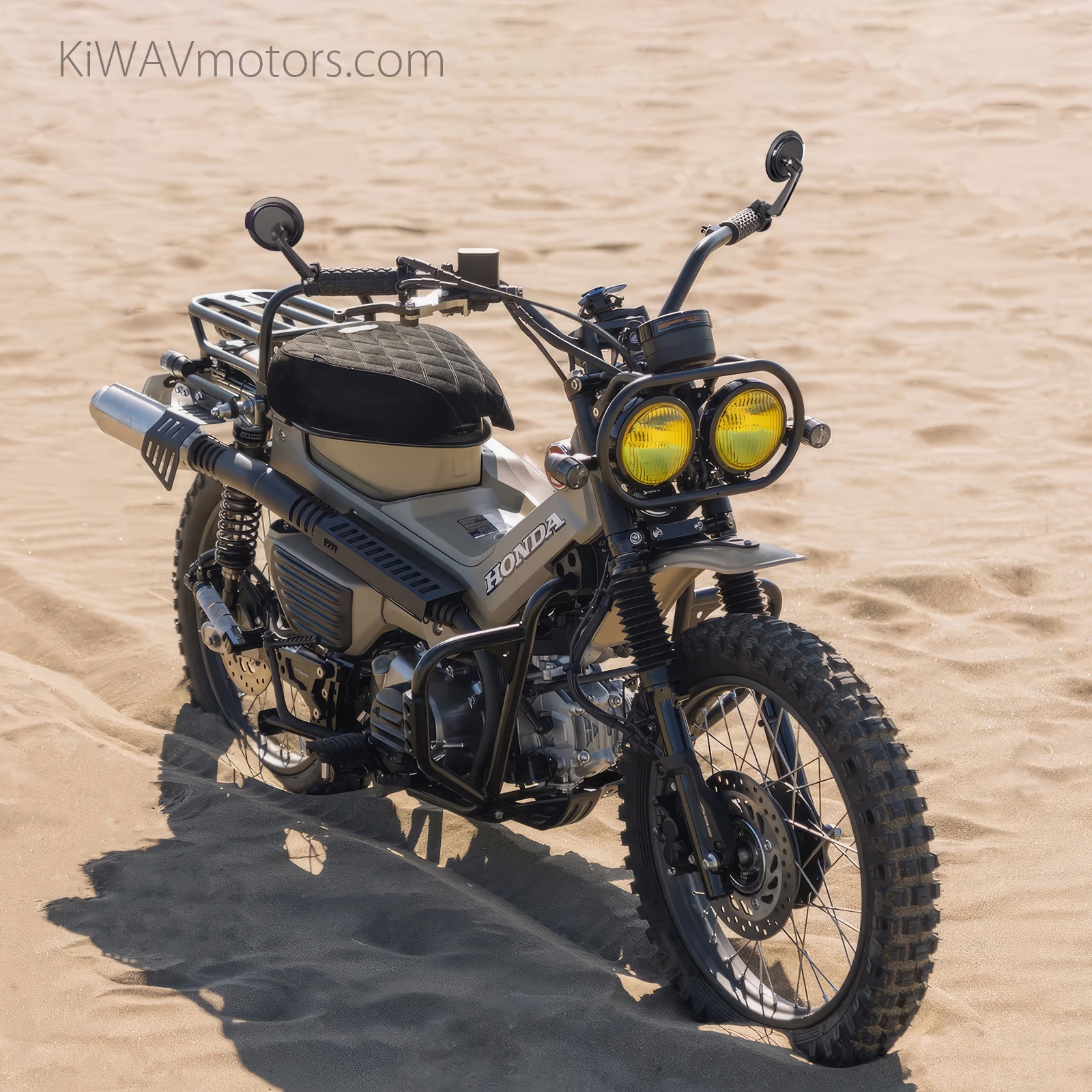
Photo note: The Honda CT125 photographs on this page show KiWAV Aura bar-end mirrors on other customer motorcycles. They illustrate completed CT125 installations and are not photographs of the motorcycle in the documented support case.
What happened in this 2024 Honda CT125 installation?
The rider had a 2024 Honda CT125 with stock handlebars and asked a local motorcycle shop to install expansion-mount bar-end mirrors. The shop found that the inside of the handlebar was occupied by the Honda factory insert, inner tube or bar-end weight.
To create the clear hollow space required by the expansion hardware, the shop removed the factory internal component. It also trimmed the end of the grip where necessary to create clearance between the grip and the mirror base.
- Motorcycle: 2024 Honda CT125
- Handlebar: stock
- Installation: completed by a local motorcycle shop
- Preparation: factory internal insert removed and grip-end clearance created
- Review: installation details reviewed by the KiWAV product team in August 2026
Why must the factory handlebar insert be removed?
Expansion hardware and threaded bolt-on hardware secure a mirror in different ways.
A threaded system screws into a fixed threaded mounting point of the correct size and depth. An expansion system instead uses a sleeve inside a hollow handlebar. Tightening the bolt pulls a tapered component into the sleeve, forcing the sleeve outward against the handlebar's inner wall. Friction between the sleeve and the inner wall locks the mirror in place.
If the Honda factory insert still occupies the handlebar, the expansion sleeve cannot reach and grip a suitable clear section of the inner wall. The hardware may rotate without developing sufficient clamping force. Removing the complete factory insert or internal weight exposes the hollow section required by the expansion mount.
Before selecting any bar-end mirror mounting system, use our Bar-End Mirror Fitment Check: Step-by-Step Guide to identify whether the handlebar is hollow, threaded, solid or occupied internally.
Honda CT125 bar-end mirror installation steps
- Remove the existing bar-end part. Expose the actual end of the metal handlebar.
- Inspect the handlebar interior. Identify the Honda factory insert, inner tube or internal bar-end weight.
- Remove the factory internal component. Use the appropriate workshop method for the specific handlebar construction. Do not try to expand the mounting sleeve inside the factory insert.
- Confirm a clear hollow section. Check the available inner diameter and usable depth against the supplied expansion hardware.
- Create grip-end clearance only where required. If the grip or throttle tube extends beyond the metal bar, remove only the minimum grip material needed for the mirror base to sit correctly.
- Prepare the expansion assembly. Assemble and lightly hand-tighten the sleeve components so they remain together while still sliding into the handlebar.
- Insert and secure the mount. Tighten the mounting bolt so the sleeve expands firmly against the inner handlebar wall. Do not use excessive force to compensate for an incorrect fit.
- Set the final mirror position. Adjust the mirror and confirm throttle, hand, cable, tank and steering-lock clearance.
Workshop note: Do not remove a factory insert by force if its retaining method is uncertain. If special cutting, drilling or throttle-side work is required, installation should be completed by a qualified motorcycle workshop.
When is grip-end trimming required?
Grip trimming is not automatically required on every Honda CT125. It depends on how far the grip or throttle tube extends beyond the end of the metal handlebar and how much space the mirror base requires.
On the throttle side, the mirror base must not touch the rotating grip or throttle tube. After installation, maintain a small visible gap and confirm that the throttle opens normally and snaps closed immediately when released. Only the minimum grip material required for safe clearance should be removed.
Safety checks before riding
After installation, verify all of the following:
- The expansion mount cannot be rotated by hand.
- The mirror base sits squarely against the handlebar end.
- The throttle opens smoothly and snaps closed freely.
- The grip does not rub against the mirror base.
- Control cables are not stretched, pinched or trapped.
- The mirrors do not contact the fuel tank, bodywork or accessories at full steering lock.
- The mirror joints remain in position after adjustment.
- All mounting fasteners are rechecked after the first ride.
For the complete general procedure, see The Complete Guide to Installing Motorcycle Bar-End Mirrors.
What the Aura CT125 photos show
The photographs on this page show KiWAV Aura blue heavy-weight bar-end mirrors for Honda mini motorcycles installed on other Honda CT125 motorcycles.
They provide visual examples of the completed bar-end layout. The Aura product information also notes that the Honda factory insert or bar-end weight must be removed before installation. The surrounding components shown in the photographs may differ from those on a stock motorcycle.
Frequently asked questions
Which mounting method is used for this Honda CT125 setup?
This setup uses an expansion sleeve inside a clear hollow section of the handlebar. The factory internal insert or bar-end weight must be removed before the sleeve can expand against the handlebar's inner wall.
Why does expansion hardware spin instead of tightening?
An expansion sleeve locks only when it can expand against a suitable inner surface. If the factory insert still occupies the bar, the available depth is insufficient, or the sleeve does not match the inner diameter, the assembly may rotate without developing enough clamping force.
Must every Honda CT125 grip be trimmed?
No. Trimming depends on the grip, throttle tube and mirror-base position. In this documented 2024 CT125 case, the shop determined that limited trimming was required to provide safe clearance.
Does the complete handlebar need to be replaced?
Not necessarily. The stock handlebar was retained in this case. The shop removed the internal factory component to create space for the expansion hardware.
Can the installation be completed at home?
An experienced owner may be able to install the expansion mount after the factory insert has been removed correctly. Professional installation is recommended if the insert is difficult to remove, its retaining method is uncertain, or throttle-side cutting is required.