


Riding Technique & Visibility Mastery
Visibility is a skill, not just a reflection. While high-quality hardware provides the foundation, true road mastery comes from knowing how to use that equipment effectively. For a motorcycle rider, situational awareness is a dynamic process—it's the difference between merely seeing a vehicle and anticipating its next move.
We bridge the gap between hardware and technique. You will find professional insights on everything from precision mirror adjustment and blind-spot management to troubleshooting complex issues like high-speed vibration. We explore the ergonomics of different riding positions and how to integrate modern tech, ensuring you maintain a clear, 360-degree mental map of the traffic around you.
Whether you are a daily commuter navigating dense urban lanes or a long-distance tourer cruising at highway speeds, these techniques are designed to reduce your mental load and increase your reaction time. Explore our guides below to transform your mirrors from a passive accessory into an active safety tool.
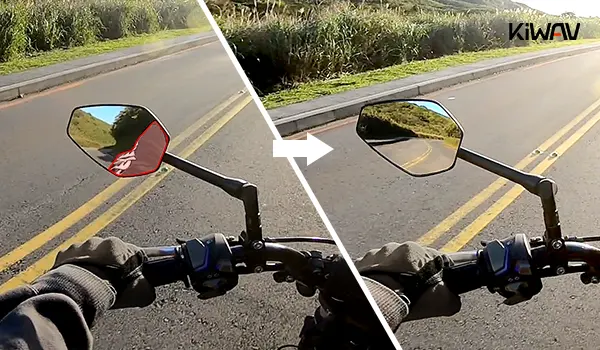
Motorcycle mirrors are one of the most important tools for situational awareness on the road. Unlike cars, motorcycles do not have a central rear-view mirror, which means riders must rely on two side mirrors and frequent shoulder checks to monitor traffic behind them.
When adjusted correctly, mirrors help riders:
- Detect approaching vehicles early
- Change lanes safely
- Monitor traffic at stops
- Maintain awareness without turning their head constantly
However, many riders discover that their mirrors show too much of their shoulders or elbows, or that the view behind the bike feels limited. This is a common problem caused by mirror placement, riding posture, and motorcycle design.
This guide explains how to correctly adjust motorcycle mirrors and includes practical tips frequently shared by experienced riders in motorcycle forums.
- Details
- Written by: KiWAV
Complete Visibility Guide
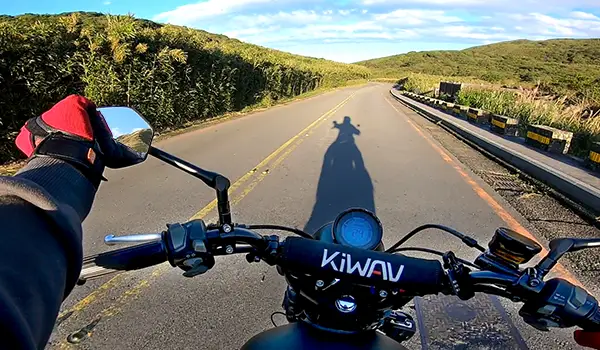
Motorcycle mirror adjustment is usually explained in general terms, but short riders face a different geometry problem.
Because your eye height is lower relative to the mirror mount, standard mirror angles often end up showing too much sky, elbows, or shoulders instead of traffic behind you.
When mirrors are adjusted correctly, riders gain:
- Faster rear awareness
- Safer lane changes
- Smoother riding in traffic
This guide explains how short riders can properly set up motorcycle mirrors, including a mirror-alignment technique inspired by how professional racing riders configure their field of view.
- Details
- Written by: KiWAV
Understanding the Real Causes Behind Blurred Rearward Vision
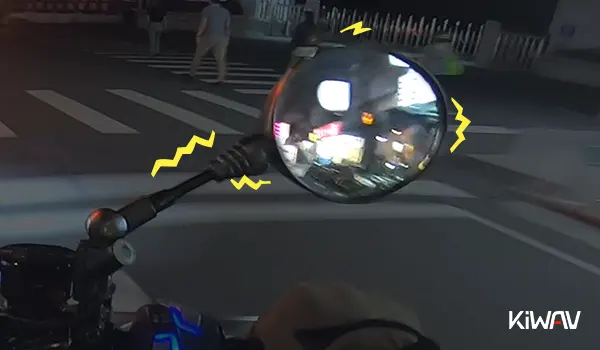
Motorcycle mirrors rarely vibrate because of a single defect. In most cases, vibration occurs when engine vibration, mounting structure, and mirror design interact as a system.
Understanding the root cause of mirror vibration is the first step toward achieving a clear and stable rearward view.
- Details
- Written by: KiWAV
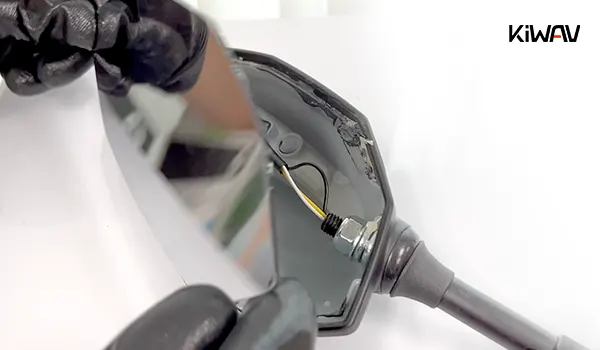
Motorcycle mirror vibration can make it difficult to clearly see traffic behind you. In many cases, riders assume the mirror itself is defective and replace it immediately.
However, mirror vibration is usually caused by handlebar resonance, mounting looseness, or engine vibration transmitted through the motorcycle frame.
Before replacing your mirrors, use the following troubleshooting steps to identify the actual source of vibration.
- Details
- Written by: KiWAV
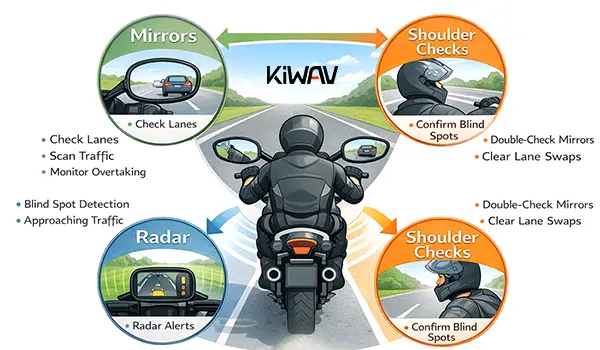
How Riders Monitor Traffic Behind Them
Rear awareness is one of the most important safety skills for motorcycle riders. Unlike cars, motorcycles provide limited rearward visibility and require riders to actively monitor traffic behind them. Good rear awareness helps riders detect approaching vehicles, anticipate lane changes, and respond to potential hazards earlier.
Modern riders use a combination of three main methods to maintain awareness behind their motorcycle:
- Rear-view mirrors
- Shoulder checks
- Electronic detection systems such as radar
Each method plays a different role, and experienced riders typically combine all three.
- Details
- Written by: KiWAV