


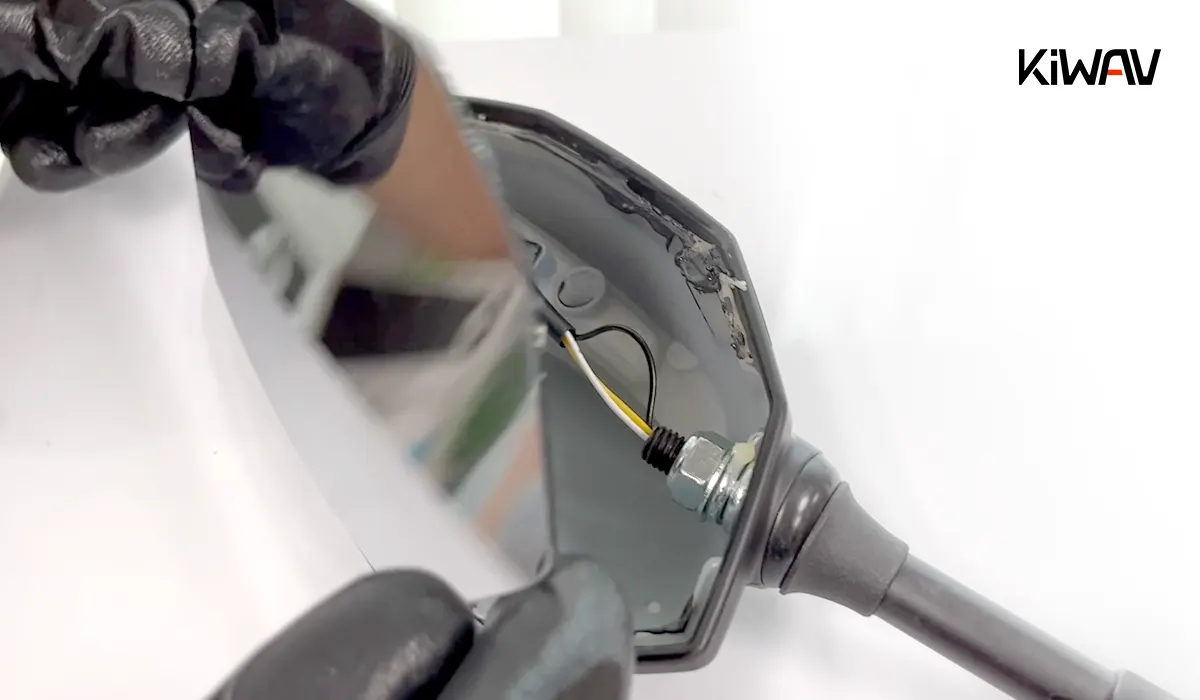
Motorcycle mirror vibration can make it difficult to clearly see traffic behind you. In many cases, riders assume the mirror itself is defective and replace it immediately.
However, mirror vibration is usually caused by handlebar resonance, mounting looseness, or engine vibration transmitted through the motorcycle frame.
Before replacing your mirrors, use the following troubleshooting steps to identify the actual source of vibration.
Quick Answer
Motorcycle mirror vibration is usually caused by handlebar resonance, loose mounting hardware, or engine vibration transmitted through the motorcycle frame. In many cases, the problem can be reduced by tightening mirror mounts, ensuring bar-end weights are installed, improving mounting rigidity, or adding handlebar mass to change the vibration frequency.
If you want to understand the mechanical causes behind mirror vibration, see: Why Motorcycle Mirrors Vibrate
1. Tighten All Mirror Mounting Points
Loose mounting hardware is one of the most common causes of mirror vibration.
Check the following:
- Mirror mounting threads
- Mounting bolts
- Handlebar adapters
- Expansion inserts (for bar-end mirrors)
Even small looseness can amplify vibration while riding. If one mirror vibrates more than the other, the cause is often uneven mounting torque or a loose mount on one side.
2. Inspect the Mirror Pivot Joint
Most mirrors use pivot joints that allow the rider to adjust the viewing angle. Over time these pivots may develop small amounts of play.
Signs of pivot wear include:
- Mirror shaking while riding
- Mirror angle slowly drifting
- Vibration even though the mirror mount feels tight
If the pivot bolt can be tightened safely, doing so may reduce vibration.
3. Verify Bar-End Weights Are Installed
Many motorcycles are designed with bar-end weights to reduce handlebar vibration. These weights change the natural vibration frequency of the handlebars. If bar-end weights are removed or replaced with lighter accessories, mirror vibration may increase.
This often happens when riders install:
- Bar-end mirrors
- Handlebar guards
- Aftermarket bar-end caps
If vibration appeared after installing accessories, check whether the original bar-end weights were removed.
4. Inspect Handlebar Mounting Stability
Mirror vibration can originate from the handlebar assembly rather than the mirror.
Inspect the following components:
- Handlebar clamps
- Control perches
- Brake and clutch mounts
- Handlebar adapters
If these components are slightly loose, vibration from the engine can travel through the handlebars and reach the mirrors.
5. Identify Engine RPM Resonance
Some riders notice that mirrors vibrate only within a certain engine RPM range.
For example:
- Clear mirrors at low RPM
- Heavy vibration around mid-range RPM
- Clear again at higher speeds
This usually indicates engine resonance, not a mirror defect.
Possible solutions include:
- Adjusting riding RPM
- Increasing handlebar mass
- Improving mirror mounting rigidity
6. Add Mass to the Handlebars
Handlebars behave like long metal tubes and can resonate at certain frequencies, adding mass can reduce vibration.
Common solutions include:
- Heavier bar-end weights
- Internal handlebar weights
- Bar-end mirrors with solid mounts
Changing the mass distribution shifts the vibration frequency and can improve mirror stability.
7. Check Front Wheel Balance
If mirror vibration appears mainly at specific road speeds, the cause may be wheel imbalance rather than engine vibration.
Typical signs include:
- Vibration appears around certain speeds
- Vibration increases with speed
- Vibration disappears when slowing down
In these cases, checking front wheel balance may solve the problem.
Symptom → Cause → Fix Diagnostic Table
This quick diagnostic table can help identify the most likely source of mirror vibration.
| Symptom | Likely Cause | Suggested Fix |
|---|---|---|
| Mirrors vibrate at certain engine RPM | Engine resonance | Change RPM range or increase handlebar mass |
| Mirrors vibrate at certain road speeds | Wheel imbalance | Check front wheel balance |
| One mirror vibrates more than the other | Uneven mounting or loose hardware | Check mounting bolts and threads |
| Mirrors vibrate after installing accessories | Missing bar-end weights | Reinstall or upgrade bar-end weights |
| Mirrors vibrate despite tight mounting | Pivot joint looseness | Inspect mirror pivot mechanism |
| Mirrors shake on rough roads | Flexible mounting point | Improve mounting rigidity |
Real-World Rider Experiences
Motorcycle forums frequently discuss mirror vibration problems. These discussions reveal that the issue is often caused by the handlebar system rather than the mirror itself.
Missing Bar-End Weights
Many riders report that mirror vibration increased after removing factory bar-end weights during modifications. Factory bar-end weights are designed to dampen specific vibration frequencies. Removing them can make handlebar vibration more noticeable.
Hollow Handlebar Resonance
Some riders with hollow handlebars report stronger mirror vibration. A common solution suggested in forums is installing internal handlebar weights or heavier bar-end weights to dampen vibration.
Vibration at Specific RPM
Another frequently reported situation is mirror vibration appearing only within a certain RPM range. Riders often discover that changing engine speed slightly eliminates the vibration, confirming that the problem is resonance rather than a loose mirror.
Frequently Asked Questions
Q: Why do motorcycle mirrors vibrate at certain speeds?
Mirror vibration at specific road speeds is often caused by wheel imbalance or aerodynamic forces. If the vibration increases as speed increases but does not depend on engine RPM, the source is usually the front wheel rather than the mirror itself.
Q: Why do motorcycle mirrors vibrate only at certain RPM?
Vibration that appears at specific engine RPM ranges is usually caused by engine resonance. The engine produces vibration pulses that travel through the frame and handlebars. When those vibrations match the natural frequency of the mirror or handlebar system, the mirror image becomes blurry.
If you want to understand the mechanical causes behind mirror vibration in more detail, see: Why Motorcycle Mirrors Vibrate
Q: Are bar-end mirrors less likely to vibrate?
Bar-end mirrors can sometimes reduce vibration because they add mass to the end of the handlebars and shift vibration frequencies. However, mirror stability still depends on the mounting design, handlebar rigidity, and overall vibration characteristics of the motorcycle.
Q: Do heavier mirrors reduce vibration?
Heavier mirrors may change vibration behavior, but weight alone does not guarantee stability. The rigidity of the mirror arm, the mounting structure, and the presence of bar-end weights often play a larger role in reducing vibration.
Q: Can mirror vibration be completely eliminated?
Motorcycles naturally produce vibration from the engine and road surface, so mirrors may never be completely vibration-free. However, proper mounting, vibration damping, and handlebar tuning can significantly improve mirror clarity.
Q: Why does one mirror vibrate more than the other?
If one mirror vibrates more than the other, the cause is usually:
- Uneven mounting torque
- Slightly loose mirror threads
- Pivot joint wear
- Uneven handlebar resonance
Checking and tightening the mounting points on that side often improves stability.
Further Reading & Related Guides
Motorcycle mirror blur is usually caused by vibration traveling through the handlebars rather than a defect in the mirror itself. Checking mounting hardware, ensuring bar-end weights are installed, and improving handlebar vibration damping can significantly improve mirror clarity. Correct diagnosis is important before replacing mirrors or other components.
From here, you can explore: