


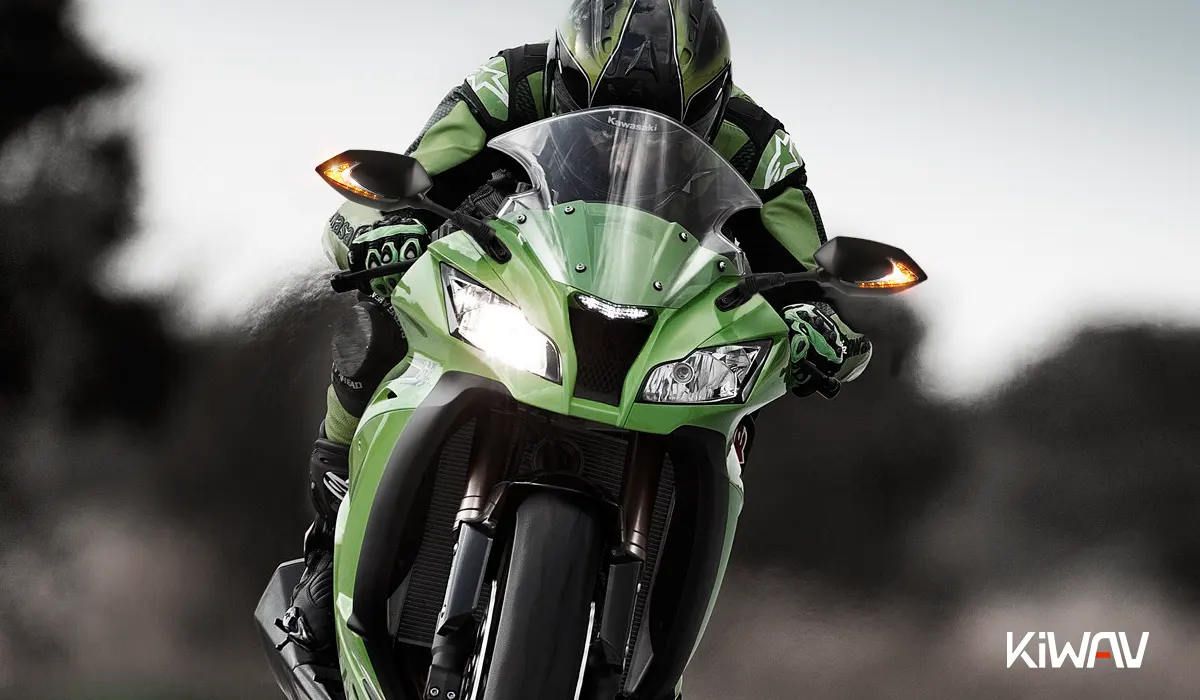
Features that actually improve comfort, clarity, and confidence.
At first glance, a mirror is a simple component with a singular job: reflecting the road behind you. However, seasoned riders know that after hours in the saddle—navigating dense urban traffic or cruising at highway speeds—the gap between a basic mirror and a well-engineered one becomes clear.
The truth is, some mirrors simply feel better to live with than others. This difference rarely comes down to the mounting style alone; instead, it is found in the thoughtful functional details that quietly support your awareness and convenience. Beyond simple visibility, these integrated features transform a passive reflection into an active riding tool that improves your comfort and confidence every day.
Mirrors That Do More Than Reflect
Some handlebar-mounted mirrors integrate features that go beyond basic rearward visibility. These features are independent of mounting type and may appear on both perch-mount and bolt-through designs, depending on the mirror's construction and how your handlebar is set up.
What matters isn't where the mirror mounts—it's how the feature fits into your riding routine.
Understanding the common points of failure helps you choose a more reliable setup → Read: Why Motorcycle Mirrors Fail: 10 Real-World Problems & Design Solutions
Integrated LED Mirrors: Visibility Without Extra Clutter
(Driving light / turn signal / dual-function designs)
Some mirrors incorporate LED elements directly into the mirror housing. Depending on the design, these LEDs can function as auxiliary driving lights, turn signals, or a combination of both. For many riders, the appeal isn't about adding more lights—it's about being seen without adding more parts.
Why riders appreciate them:
- Better visibility to surrounding traffic, especially in dense urban environments
- Clear signaling without bolting extra components onto the bike
- A cleaner handlebar setup with fewer separate housings
Best suited for riders who:
- Commute regularly in traffic
- Ride at night or in low-visibility conditions
- Want functional safety upgrades that don't disrupt the bike's visual balance
When done right, integrated LED mirrors feel less like an add-on—and more like a natural extension of the bike.
Comparing different integrated lighting setups: → Explore the KiWAV integrated LED mirrors solutions
Mirrors with Integrated TPMS Indicators: Information Where You Already Look
Some mirror designs display tire pressure information directly within the mirror housing, keeping critical data in your natural line of sight. Instead of checking a separate screen or waiting for the bike to feel “off,” you get early feedback without changing your riding posture.
Why riders appreciate them:
- Early awareness of pressure changes before they become problems
- Fewer glances away from the road
- Added confidence during long-distance or high-speed riding
Best suited for riders who:
- Spend long hours on highways
- Tour or ride fully loaded
- Value early warnings over absolute minimalism
It's not about more data—it's about calm awareness.
For technical details and visual integration of this technology: → Explore the KiWAV TPMS-integrated mirror collection
Mirrors with Blind Spot Detection (BSD): Extra Confirmation When It Counts
Some advanced mirrors include visual alerts that indicate when a vehicle enters your blind spot. For experienced riders, BSD doesn't replace proper mirror checks or head movement. Instead, it acts as a second layer of confirmation—especially useful in fast-moving, multi-lane traffic.
Why riders appreciate them:
- Better situational awareness during lane changes
- Reduced uncertainty in dense traffic
- Extra reassurance on wider or heavier motorcycles
Best suited for riders who:
- Ride daily in multi-lane traffic
- Commute on highways or busy urban roads
- Prefer added confirmation in complex traffic environments
Good BSD systems don't distract. They quietly support your decision-making.
Observing BSD technology in real-world traffic conditions: → On-road recording of integrated BSD mirrors, Nonam
Foldable Mirrors: Practical Flexibility You Notice Every Day
Foldable mirror designs allow the mirror to pivot or fold inward when needed—and return to a consistent position when unfolded. This feature tends to matter most off the road, but its impact adds up quickly.
Why riders appreciate them:
- Reduced handlebar width in tight parking spaces
- Less stress when filtering through narrow gaps
- Better protection from accidental knocks or tip-overs
Best suited for riders who:
- Park in shared or confined spaces
- Ride in dense urban environments
- Use wider handlebars or bar-end setups
A well-designed folding mechanism should feel solid at speed and predictable every time you reposition it.
Observing folding mirrors in action across various motorcycle models: → Why Choose Folding Mirrors? Features and Real-world Usage
Installation Still Matters More Than the Feature List
Mirrors with integrated features require slightly more attention during installation—regardless of how they mount.
A few things to keep in mind:
- Ensure wiring has enough clearance throughout steering movement
- Confirm the mount can support added weight without flex
- Make sure folding mechanisms don't strain internal wiring
- Recheck fasteners after initial rides
Even the best features can feel frustrating if the mirror isn't installed thoughtfully.
Why These Details Change the Ride
Advanced mirror features can improve visibility, awareness, and convenience—but only when they match how you actually ride.
The difference between a mirror that feels “right” and one that quietly annoys you often comes down to:
- Design quality
- Proper installation
- Real-world riding conditions
Not whether it's perch-mounted or bolt-through.
Frequently Asked Questions
Q: Do advanced mirror features depend on the mounting type?
No. Features like LEDs, TPMS indicators, BSD alerts, or folding mechanisms are determined by mirror design, not mounting style. Both perch-mount and bolt-through mirrors can support these features if engineered properly.
Q: Are integrated LED mirrors legal for street use?
Legality varies by region. Regulations may govern light color, brightness, and placement. Always verify local requirements before using LED mirrors on public roads.
Q: Can integrated LED mirrors replace original turn signals?
Sometimes—but not always. Many regions specify minimum spacing and visibility angles. Integrated LED mirrors are often used as supplemental signals rather than full replacements.
Q: Do TPMS or BSD mirrors need additional sensors?
Yes. TPMS mirrors display data from tire-mounted sensors, while BSD systems rely on sensors installed elsewhere on the motorcycle. The mirror typically acts as the display—not the sensing unit.
Q: Will these features increase vibration?
They can if the mirror is poorly designed or improperly mounted. Integrated electronics often add weight, making structural rigidity and correct torque especially important.
Q: Are foldable mirrors safe at highway speeds?
Yes—when the hinge mechanism is properly engineered. A quality folding mirror should remain stable at speed and return to a consistent position after folding.
Q: Do I need special wiring for feature-integrated mirrors?
Often, yes. Power routing, strain relief, and steering clearance should all be planned carefully during installation.
Q: Are advanced mirror features right for everyone?
Not always. Riders who prioritize minimal weight, simplicity, or off-road durability may prefer conventional mirrors. The best choice depends on where and how you ride.
Q: How do I know which features matter most to me?
Start with your riding environment:
- Urban commuting → LED signaling, foldable mirrors
- Highway or touring → TPMS, BSD
- Tight parking or filtering → Foldable designs
Mirrors feel better in daily riding when their features quietly support your routine—not when they simply look impressive on paper.
From here, you can explore: